

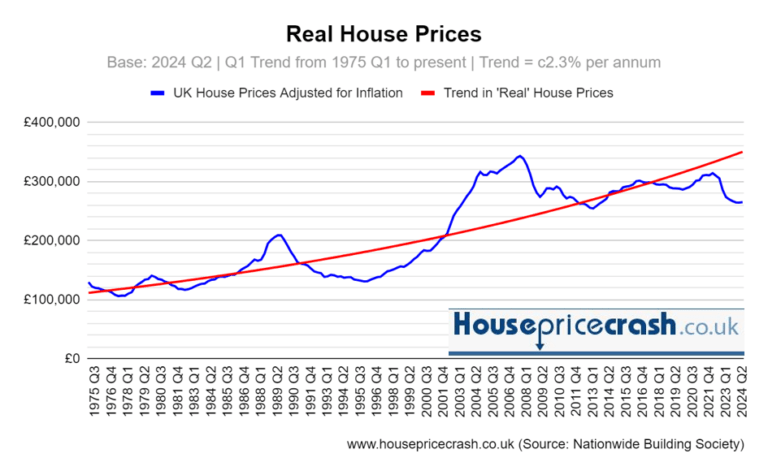
This week, the after-effects from the budget continue to filter through to the rental sector. I would posit that there will likely be an exacerbation of current shortage in rental stock in the short term (and consequent high rents – particularly in more expensive areas where the stamp duty changes will have more teeth). But no doubt with the lack of changes to Capital Gains Tax (meaning the exit door is still just as wide-open for non-incorporated Landlords), there will be opportunities for both first time buyers and new investors to buy previously rented property as well – in the very short term though only. Additionally, although the BoE interest rates dropped a quarter of a percent this week to 4.75%, inflation is predicted to rise 0.5% over the coming months – meaning hopes of any further interest rate reductions over the next few months seem slim. All in all, a relatively flat period is likely to continue for the property market for the next few months, with probably some pretty strong growth in much of 2025 as wages continue to rise. In fact, prices have only increased overall by 0.2% over the past 2 and a half years. I alluded to this flattening in a previous post back in June 2024 (aka the “silent property crash“, see graph below for an update), as over that period inflation sky-rocketed, meaning anything (as in housing) that stayed at the same sticker price has actually reduced significantly in real value terms. Was/is this the “crash” at the end of this current property cycle? It could be, but I’m still on the fence about that (and therefore applying the requisite amount of caution for the next few years). But whether it is or not, there will continue to be winners and losers – your best bet is to stay informed, ignore the mainstream media – who only want eyeballs and usually get it through inducing panic or over-excitement – and get into property!
ATTENTION LANDLORDS: Coming soon. Tired of tenancy uncertainty or the constant onslaught of regulation and risk? Wouldn’t you rather have trouble-free renting for 1-5 years at a time without any gaps in rent? Find out more here.
I’m not one for mud-slinging, but there seems to be alot of it going around at the moment. We’ve seen a member of the Royal Family being accused of letting out homes below EPC level for example (the minimum currently is E, rising the C most likely by the end of the decade), and some shocking figures from the Housing Ombudsman, who regulates social Landlords such as Councils and Housing Associations. Their headline figure being a 329% year on year increase (to 21,740) in “interventions” (e.g. repairs, compensation, improving practices). Such a large increase smacks of an increase in inspections rather than anything else one would think. But still, it’s a shocking number, and underlines what’s shown again and again – that Private tenants are for the most part more satisfied with their accommodation than their Social Housing counterparts. However, to be fair, the Social Housing space has suffered from chronic lack of investment historically.
UTILITY OF THE WEEK. Halifax House Price Index. This monthly house price series has been going in the UK since 1983, and is a good place to keep yourself updated on the big-scale state of the market.
The long-running saga that is Scottish Rent Controls continues. Overall, the government seem to be back-tracking slightly, having thrown-out the Green Party co-leader who was one of the main proponents for controls following disastrous rent increases during the original experiment – rents rose faster than anywhere else in the UK – including London – sky-rocketing whilst emergency measures were in place. Perhaps as frightened Landlords already on very slim margins (or even operating at a loss) looked to shore-up against any future controls. An excellent example of how even the suggestion of future regulation, combined with a lack of consideration for all stakeholders, can have unintended consequences. It’s likely that many Landlords who had previously perhaps not raised rents for several years were, in reaction, raising them rapidly in order to catch-up with market rents. Anecdotally, the rent controls seemed to have particularly spooked Landlords who have been in the game longer and are perhaps ready to sell. And this is a real shame for Tenants. Why? Because Landlords who have been so for longer tend to be the ones who can afford to keep rents a little lower – as they’ve gone through the risky start-up periods and are more likely to value having less hassle over having a little more margin. Also – they tend to be better at providing good accommodation and managing issues – as they have more experience. So, sadly, but as ever, this, and any and all regulation that decreases the freedom of, or increases the costs and / or risks to Landlords has the effect of – you’ve guessed it – raising rents overall.
Who are M2P? Married2Property are a family-run property company that aims to build social good through property.
Hold my pint. Imagine if the costs on your favourite food superstore were increased by the government through taxation or regulation – what do you think would happen to the cost of your food? The inconvenient, but inescapable, truth is that providing accommodation for people to live in is risky, costly to start-up, and at times very difficult and stressful to deal with – whether that be a Hotel, a Buy to Let property or a B&B. So those that spend their own money and time to do so (like any business) need to make enough profit to make it worthwhile. Otherwise the supply disappears, and what remains only goes up in price. Conversely, if you reduce costs for those that provide accommodation (either by reducing regulation or tax) what happens? Profits increase, supply increases as a result as more providers come in, standards improve as competition between providers increases – and as a result the cost to the tenant decreases – all without any intervention. I believe this is called free market economics… Additionally, it generally increases security of tenure – as the providers start having to compete over the customer – not the other way around (as is currently the case with multiple tenants competing over single properties). In other words, the best way to help tenants, is to incentive Landlords. Whilst many want to own eventually, less want to own at all stages of their lives. Many of us, particularly in cities whilst building careers, not settled-down yet, or going to University, want flexibility for significant periods of life – and certainly don’t fancy paying all the costs attached to ownership – or dealing with the responsibilities thereto. Indeed, a Halifax review last year found that the monthly cost of owning a first home exceeded equivalent rental costs in nine out of twelve UK regions (see if it is for you with this Rent vs Buy calculator). There will always be tenants, and they, and Landlords, are inescapably bonded in a symbiotic relationship – they both need one another. And like it or not – but the “mama and papa shop” Landlords who have been doing it for years and are saving a little for retirement are likely always going to be the cheapest for tenants. But this is exactly the kind that are being squeezed-out in various ways and in all areas of the UK – under the guise of helping tenants. Encouragingly however, there seems to be a tentative, but increasingly positive narrative coming from the Scottish Government with respect to; working with Landlords, maintaining the attractiveness of property investment in general and increasing policy clarity. Additionally, the Labour party has previously ruled-out rent controls in England. Maybe things are turning a corner – and if so, it wouldn’t be a moment too soon for Landlords and Tenants alike. It’s often touted that rent controls have never worked anywhere in the world. The current proposals aim to cap increases to 6% in Scotland – whilst unnatural control of market prices is probably still ill-advised (imagine how Hotels would react – or food stores if you capped the price of chocolate bars?), this rate would at least allow Landlords to keep pace with inflation (most of the time) and the market to some degree. And it would keep rent rises within a limit for tenants whilst leaving some headroom for additional costs.
MPs are set to debate increasing Landlord Licencing schemes in England from 5 to 10 years. Why longer licencing schemes? Well one reason will be that a number of original 5 year schemes are now coming to an end – and some of these are NOT being renewed. One reason for lack of renewal is that the things these licences were brought in to address (low standards) are becoming rarer. This represents a potentially significant loss of revenue to cash-strapped councils who have become used to it. It’s a bit similar to the way that fire stations put themselves “out of business” by reducing the occurrence of fires in their areas through active campaigning and preventative safety measures – which is of course is the result everybody wants. But it does underline the fact that basing your finances on a model which reduces the need for your model is a temporary measure at best, and that perhaps it’s best to look elsewhere for revenue.
If you know someone interested in property, forward this newsletter to them
Ironically perhaps, or maybe just a sign of the times and / or a changing narrative – but more councils are now offering cash incentives to Landlords to help redress the failings of previous housing policies. Cheshire has become one of the latest, offering Landlords £500 incentives in tenant matching services, saying “There are many good landlords in Cheshire West and Chester and we are proud to work with landlords and agents providing quality homes already through our Landlords Forum, and are looking forward to working with even more landlords with our new offer of the PRS.” A refreshingly collaborative approach.
We also post on Social Media daily, FOLLOW M2P on Facebook.
Song of the Week: 🎶 One Kiss – Dua Lipa 🎸
And Finally… As the Dutch proverb goes; the tallest trees catch the most wind. Rather than trying to drag down someone more successful – find out how they did it and how much work they had to put in.

Like this Newsletter
What do M2P do? Married2Property aims to create social good through by property – by housing more vulnerable groups of people – giving them a stable platform from which to try and improve their lot in life. We also offer Landlords competitive and hassle-free solutions for their property problems.
M2P: PRS (PRS038928) (CHECK HERE)
M2P: ICO (ZB527559) (CHECK HERE)


Discover more from Married2Property
Subscribe to get the latest posts sent to your email.
 Married2Property